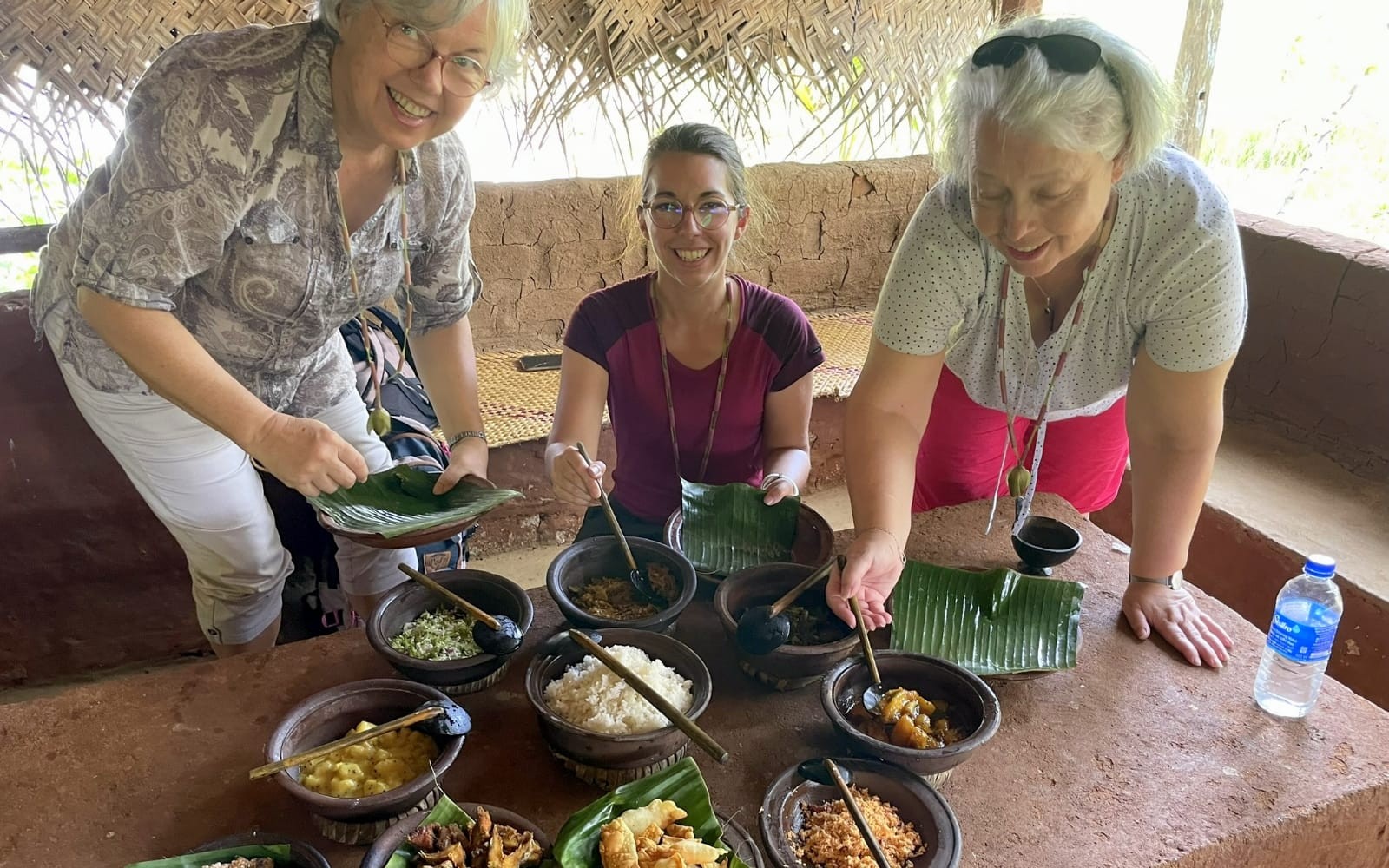
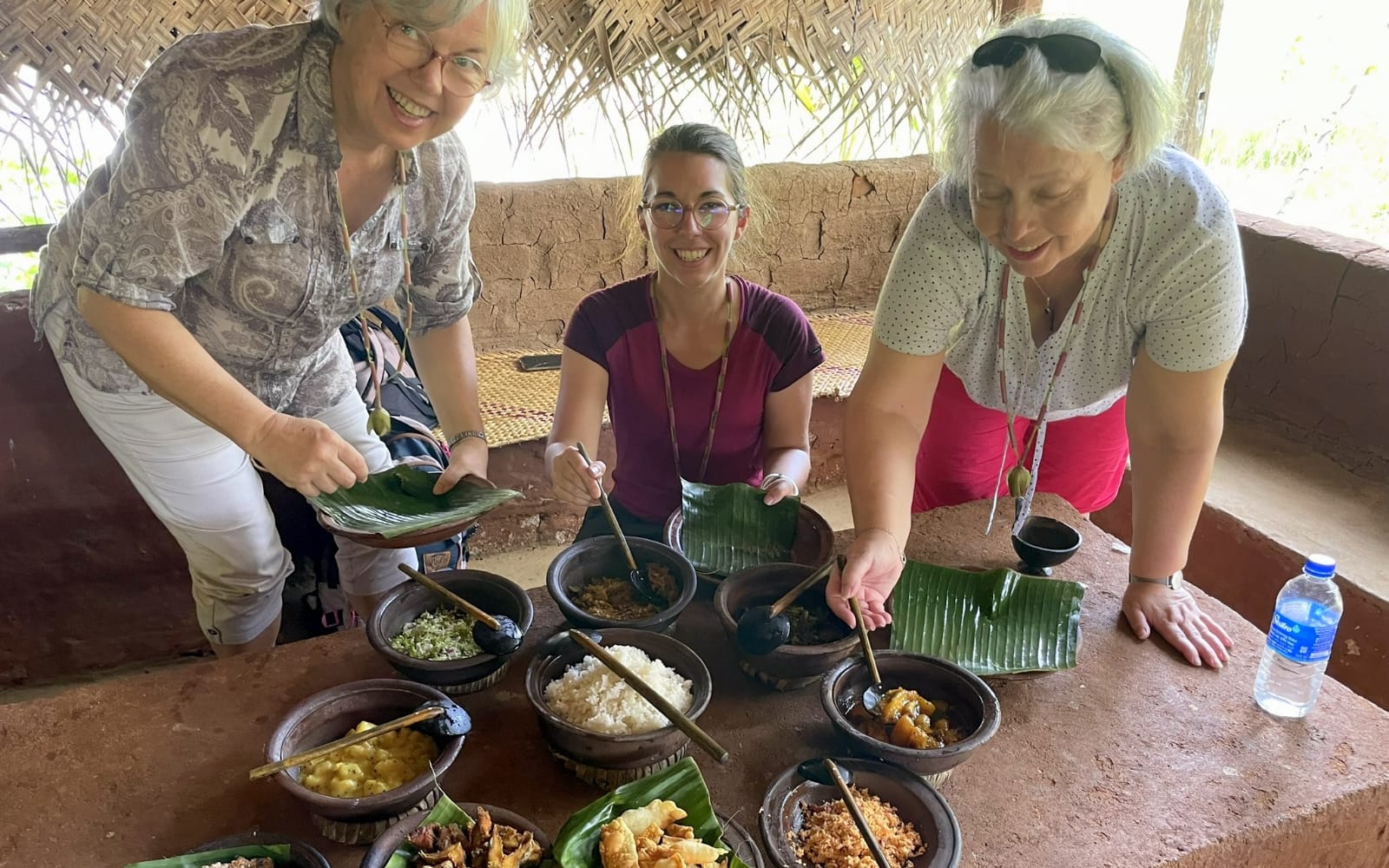
The best cooking class is usually not the one with the longest menu. It is the one that explains ingredients, flavour balance, and local cooking habits in a way that feels clear and warm.
In Sri Lanka, that might happen in a family kitchen, a market-linked workshop, a spice garden, or a coastal seafood-focused class.

Why cooking classes work so well here
Sri Lankan food is layered but approachable. Coconut, spice blends, curries, sambols, rice, hoppers, and local greens all make much more sense once you see them assembled in sequence rather than only served on a plate.
A class also gives you stories, not just recipes.
What kind of class to choose
Kandy and the cultural interior often suit spice-linked and family-style classes. Ella and the hills can be good for slower home-based sessions. Galle and Negombo work well for coastal or seafood-focused cooking experiences.
The strongest choice is usually the one that matches where you already are, so it feels integrated rather than like a forced extra.
- Choose market-led classes if ingredient sourcing interests you
- Choose home-style classes if you value conversation and atmosphere most
- Choose coastal classes if seafood and curry technique are the real draw
What to take from it
You will probably not recreate every dish perfectly at home, and that is fine. The real value is understanding how Sri Lankan flavours are built and taking a few habits or recipes home with you.
That makes the experience feel useful long after the route ends.
What makes a cooking class worth adding
The best cooking classes do more than teach a recipe list. They give you context around spices, coconut, rice, sambols, and the way meals are actually built in Sri Lankan homes and small kitchens. That sense of explanation is often what travellers remember later.
They also work best on days with room to slow down. A cooking class can be a lovely anchor for a half-day, but it loses something if squeezed between long drives and major sightseeing.
Where this fits best in a balanced trip
The easiest way to enjoy Dive into Sri Lanka’s Flavors: Discover the Best Cooking Classes is to let it become one well-placed highlight rather than one more task inside an already full day. Experiences usually feel stronger when the route protects their timing, energy, and setting.
That often means giving them a proper overnight nearby, a lighter follow-on plan, or enough room in the day that the experience still has atmosphere instead of feeling rushed.
- Use the experience as a day anchor, not only an add-on
- Avoid stacking it on top of the longest transfer in the route
- Let the surrounding overnight plan support the mood of the day